
Villa Site Visit Checklist: 25 Things to Check Before Buying a Villa
A site visit is one of the most important stages of buying a villa. Brochures, renders, floor plans and virtual tours can help you shortlist properties, but they cannot fully show how a home feels when you actually walk through it.
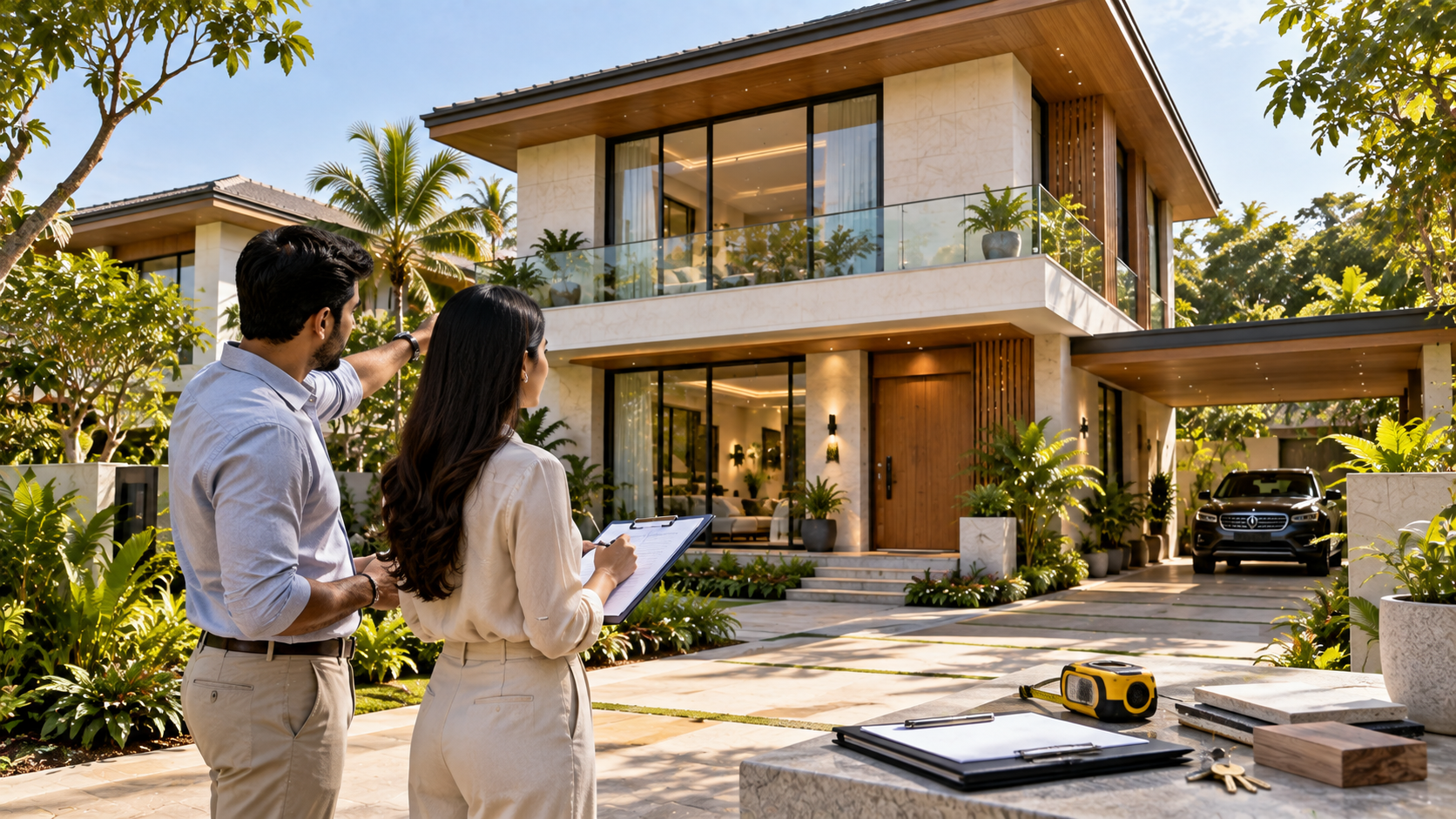
A site visit is one of the most important stages of buying a villa. Brochures, renders, floor plans and virtual tours can help you shortlist properties, but they cannot fully show how a home feels when you actually walk through it.
During a physical visit, buyers can understand the neighbourhood, road connectivity, room sizes, natural light, privacy, construction quality and overall community environment.
The problem is that an impressive sample villa can easily distract buyers from practical questions. Using a structured villa site visit checklist helps you evaluate every property using the same criteria rather than making a decision purely based on first impressions.
Whether you are considering a ready home or an under-construction luxury villa in Coimbatore, here are 25 things worth checking before you book.
1. Check the Approach Road
Your site visit should begin before you enter the project. Observe road width, surface conditions, traffic, street lighting, public transport access, and the overall ease of entry and exit.
2. Test Actual Travel Time
Do not rely entirely on kilometre distances in marketing material. Drive from the property to destinations important to your family (workplace, airport, school, hospitals, supermarkets) and note the actual travel time.
3. Visit During Peak Hours
A neighbourhood can feel completely different at 11 AM compared with 6 PM. As part of your checklist, try visiting during morning or evening traffic.
4. Examine the Surrounding Neighbourhood
Look around for existing residential developments, commercial buildings, vacant land, industrial activity, noise levels, and street conditions.
5. Understand the Project Density
Ask how many villas are planned within the total development. Density influences privacy, traffic, noise, open spaces, and amenity usage.
Zenora, for example, currently describes itself as a 60-villa community in Goldwins, Coimbatore. Buyers can review the Zenora project while comparing community plans.
6. Check Internal Road Widths
Walk or drive through the internal roads. Ask whether two vehicles can comfortably pass each other and if visitor parking could obstruct movement.
7. Evaluate Distance Between Villas
Check window-to-window visibility, balcony-to-balcony visibility, garden privacy, and the physical distance between buildings.
8. Check Security Planning
Understand how entry and exit are managed, security personnel setup, CCTV coverage, and visitor/delivery access controls.
9. Verify the Plot Area
Ask for the exact plot area associated with the villa and physically observe setbacks, garden size, parking, and building footprint.
10. Understand Carpet and Built-Up Area
Ask separately for the plot area, carpet area and built-up measurements. The Real Estate (Regulation and Development) Act provides a statutory definition of carpet area. Review the RERA Act through India Code.
11. Measure Important Rooms
Model homes can look larger because of carefully selected furniture. Check the actual dimensions of the living room, master bedroom, children's rooms, kitchen, and dining area.
12. Check the Floor-Plan Flow
Walk through the villa naturally and ask if the kitchen is convenient from the dining room, if bedrooms are private, and if guest movement is separated.
13. Check Natural Light
Visit during daylight and observe whether major rooms need artificial lights. Look at living spaces, bedrooms, kitchen, staircase, and corridors.
14. Check Ventilation
Open windows where possible. Understand whether air can move through major living areas and if neighbouring villas restrict airflow.
15. Inspect Construction Quality
If the villa is completed, examine visible workmanship for cracks, uneven floors, damp patches, paint finish, door alignment, and window gaps.
16. Examine the Kitchen and Utility Area
Check counter space, storage, ventilation, utility access, appliance locations, and dining connection.
17. Inspect Bathrooms
Verify ventilation, water flow, drainage, floor slopes, fixture quality, and space around sanitaryware.
18. Check Parking Properly
Confirm that car doors can open comfortably and vehicles can enter and exit without excessive manoeuvring. Consider future EV-charging requirements.
19. Inspect Gardens and Outdoor Spaces
Walk through all private outdoor areas. Check whether gardens and setbacks are genuinely usable for pets, children, or seating.
20. Visit the Terrace
Inspect the terrace personally for access, privacy, drainage, waterproofing parapet height, and electrical/water provisions.
21. Inspect the Amenities
Walk through the actual clubhouse, swimming pool, sports facilities, play areas, and walking paths.
22. Understand Maintenance Charges
Get clarity on the expected monthly charges, what services are included, and who manages the common facilities.
23. Request the Complete Cost Sheet
Request a written cost breakdown showing the property cost, registration expenses, maintenance deposits, utility costs, and taxes.
24. Verify Project Documentation
For Tamil Nadu projects, verify registration and approvals through the Tamil Nadu Real Estate Regulatory Authority.
25. Imagine Living There for Ten Years
Stop evaluating the villa as a visitor and imagine it as your home. Ensure it can adapt as the family grows and meets long-term lifestyle needs.
Questions to Ask Before Leaving: Before ending the visit, ensure you have clear written answers regarding price, area statements, possession timeline, specifications, maintenance charges, and RERA approval.
For additional information on villa buying, property areas and premium residential living, buyers can also explore Zenora Insights.
Frequently Asked Questions
1. What should be included in a villa site visit checklist?
A complete villa site visit checklist should cover location, road connectivity, neighbourhood, plot area, room dimensions, floor plan, natural light, ventilation, construction quality, parking, outdoor spaces, amenities, maintenance charges, total costs and project documentation. Buyers should evaluate both the villa and the larger community before making a decision.
2. What are the most important things to check before buying a villa?
The most important things to check before buying a villa include legal and project documentation, location, usable area, construction quality, privacy, floor-plan functionality, water and power infrastructure, amenities and total ownership costs. Long-term family requirements should also be considered rather than focusing only on current needs.
3. What questions should I ask before buying a villa?
Important questions to ask before buying a villa include: What is the exact plot and usable area? What specifications are included? What is the complete cost? What are the maintenance charges? Which amenities will be delivered? What is the possession timeline? What project documentation can be independently verified? Getting written answers wherever appropriate can make property comparisons easier.
4. Should I visit a villa project more than once before buying?
Yes. A villa inspection checklist is more useful when the property is evaluated under different conditions. If possible, visit once during normal daylight and again during peak traffic or evening hours. This can reveal differences in road congestion, neighbourhood activity, lighting, privacy and overall accessibility that may not be obvious during a single scheduled visit.