
Plot Area vs Built-Up Area: A Complete Guide for Villa Buyers
When comparing villas, buyers frequently come across impressive numbers such as 3,500 sq. ft., 5,000 sq. ft. or even 10,000 sq. ft. But those numbers do not always represent the same thing.
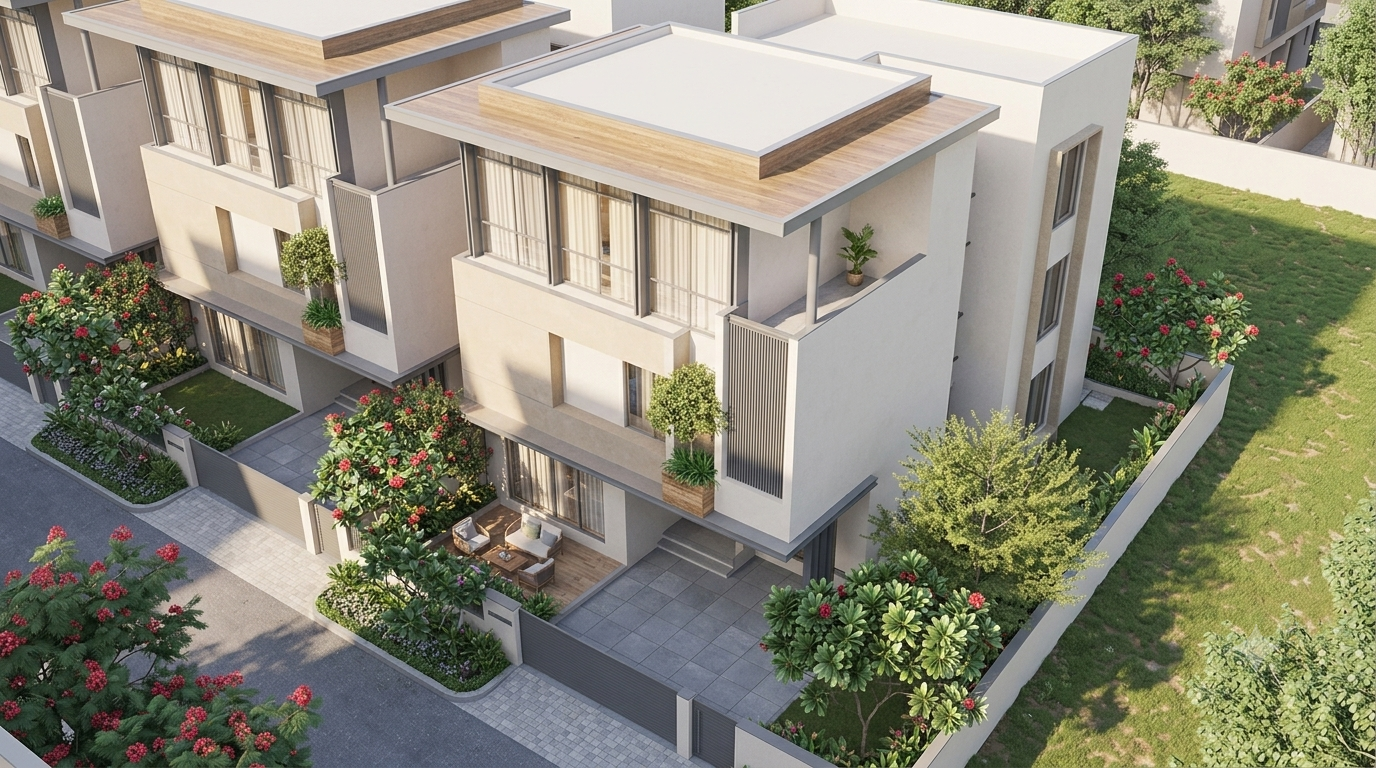
When comparing villas, buyers frequently come across impressive numbers such as 3,500 sq. ft., 5,000 sq. ft. or even 10,000 sq. ft. But those numbers do not always represent the same thing.
One property advertisement may mention the plot area, another may highlight the built-up area, while another may focus on carpet area. Comparing these figures without understanding what each one represents can create an inaccurate picture of how much land and usable living space you are actually getting.
Understanding plot area vs built-up area is therefore one of the most important basics for anyone purchasing a villa.
This becomes even more relevant with premium homes because a villa's value is not determined only by the building. The land, garden, setbacks, parking, terraces and usable interior spaces all contribute to the overall living experience.
Here is a practical guide to understanding the different area measurements before you compare properties.
1. What Is Plot Area?
In everyday real estate usage, plot area generally refers to the total land parcel associated with a property. For a villa, this land may accommodate:
- —The building footprint
- —Front, rear, and side setbacks
- —Private gardens, parking, and outdoor seating
- —Landscaping and other open areas
For example, two villas may have almost identical internal living areas but very different plot sizes. One may have generous gardens and wider setbacks, while another may use a greater proportion of the land for construction. A larger plot can create opportunities for greater privacy, landscaping and outdoor living.
2. What Is Built-Up Area?
The built-up area of a villa generally refers to the total covered constructed area and commonly includes usable internal floor space together with areas occupied by walls and certain other covered spaces.
Whenever you see a property advertised with a particular built-up area, ask what exactly has been included in this number. Calculations can vary by developer, so request a detailed area statement or floor plan.
3. Plot Area vs Built-Up Area: What Is the Main Difference?
The easiest way to understand plot area vs built-up area is:
- —Plot area = the land associated with the property.
- —Built-up area = the covered construction on that land.
Plot area tells you how much land you own, whereas built-up area helps you understand how much covered constructed space the home provides. Villa buyers should usually consider both.
4. What Is Carpet Area?
Carpet area is another important measurement, and unlike many marketing terms, it has a specific definition under India's Real Estate (Regulation and Development) Act, 2016.
The Act defines carpet area as the net usable floor area of an apartment, excluding areas covered by external walls, service shafts, exclusive balconies/verandahs and exclusive open terraces, while including the area covered by internal partition walls.
Buyers can review the Real Estate (Regulation and Development) Act on India Code. In simple buying terms, carpet area gives you a clearer indication of the internal floor space available for use.
5. Carpet Area vs Built-Up Area
Understanding carpet area vs built-up area is equally important. A villa may advertise a large built-up area, but built-up area can account for structural elements in addition to net usable floor area. Ask every developer to provide measurements using consistent terminology.
6. Why Plot Area Matters More for Villa Buyers
Villa buyers have another dimension to consider: land. A well-planned villa plot area can provide: private garden space, greater separation from neighbours, outdoor seating, better daylight, and improved ventilation.
This relationship between land and building is one of the characteristics that distinguishes villa living from conventional apartment living.
7. Bigger Built-Up Area Does Not Always Mean Better Planning
A common mistake is assuming that the property with the largest built-up area automatically provides the best value. Floor-plan efficiency matters just as much.
A large built-up area of a villa can sometimes include significant space devoted to long corridors, staircases, and poorly usable corners. Check room dimensions, storage suitability, and furniture placement instead of relying on the headline number.
8. Do Not Ignore the Building Footprint
The building footprint refers broadly to the amount of ground-level space occupied by the building. Two villas on similarly sized plots can distribute land very differently. One design may occupy a greater portion of the plot at ground level, while another may build vertically and preserve more outdoor area.
9. Look at Open Space Around the Villa
When visiting a villa, walk around the entire property: front garden depth, rear open space, side setbacks, and parking layouts. A well-planned plot can feel far more spacious when open areas are distributed intelligently.
10. Compare Floor Plans Before Comparing Prices
Before deciding which property provides better value, request detailed floor plans. When studying villa developments such as Zenora Villas, buyers can review configurations to see how plot planning relates to their requirements.
11. Calculate How Much Space Your Family Actually Needs
More square footage usually means a higher purchase price and potentially greater long-term maintenance. Ask yourself what your family actually needs (family size, home office, parents' requirements, and storage). The aim should be to purchase the right combination of land and usable space.
12. Think About Outdoor Space as Usable Space
Evaluating plot area vs built-up area should not become a competition between land and construction. A good villa needs the right balance of both, allowing gardens, terraces, and balconies to act as extensions of the home.
13. Understand Measurement Units
Property areas may be presented in square feet, square metres, cents, or acres. Make sure every property is converted into a consistent unit before comparison.
14. Verify Area Information in Project Documentation
For applicable projects, buyers can verify project details and registered information through the Tamil Nadu Real Estate Regulatory Authority. Review applicable documents carefully and ensure the measurements used in agreements are clearly understood.
15. Use Area Measurements to Understand Value, Not Just Price
A buyer who values entertaining indoors may favour additional constructed space. A buyer who values privacy, gardens and outdoor living may favour the larger plot. This is why property area calculation should always be connected to lifestyle requirements.
For more information on villa buying and premium residential living, buyers can explore Zenora Insights.
Summary of Measurements: Plot area refers to the overall land parcel, built-up area describes the covered constructed space, and carpet area indicates the net usable internal floor space under RERA.
None of these measurements should be viewed in isolation. The best property is the one where both the land and construction are effectively planned around your lifestyle.
Frequently Asked Questions
1. What is the main difference between plot area and built-up area?
The simplest way to understand plot area vs built-up area is that plot area generally refers to the overall land parcel associated with the property, while built-up area generally refers to the covered constructed space. Villa buyers should evaluate both because the land influences gardens, setbacks and privacy, while the built-up area relates to the size of the constructed home.
2. What is the difference between carpet area vs built-up area?
In a carpet area vs built-up area comparison, carpet area focuses on net usable floor area and has a specific definition under the Real Estate (Regulation and Development) Act. Built-up area is a broader industry term that generally includes the usable internal area along with walls and certain covered constructed portions. Buyers should ask the developer exactly how the built-up figure has been calculated.
3. Is a larger villa plot area always better?
Not necessarily. A larger villa plot area can provide more gardens, setbacks, parking and outdoor space, but the quality of planning is equally important. A smaller but intelligently planned plot may suit some families better than a larger plot where the outdoor areas are difficult to use.
4. What area measurements should I check before buying a villa?
Before purchasing a villa, compare the plot area, applicable carpet area, built-up area, actual room dimensions, garden space, balconies, terraces, parking and overall floor-plan efficiency. Understanding plot area vs built-up area together with usable internal space gives buyers a much clearer picture of what they are actually purchasing.